Air Quality Preparedness

Protect Yourself from Wildfire Smoke
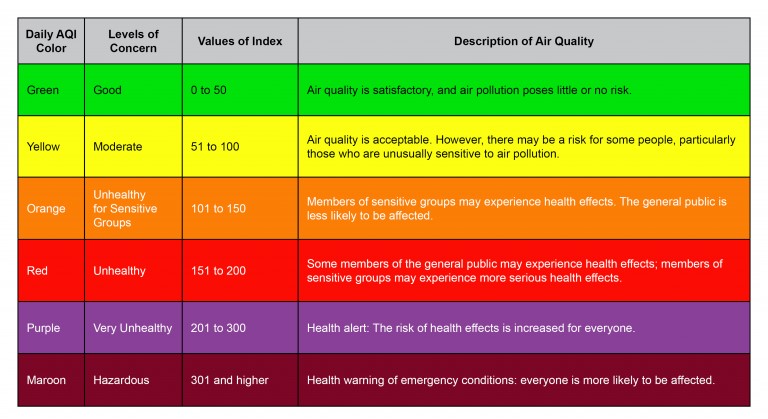
You can find updates for your area by visiting The U.S. Environmental Protection Agency AirNow website. The site maintains an interactive map of air quality that allows users to see the locations of active fires and assess local conditions and risks. View the index table below to see what the value means for your location.
The following actions to limit exposure are recommended based on expertise from Mt. Sinai and the EPA.
Stay inside with the doors and windows closed. Whether you have a central air conditioning system or a room unit, use high efficiency filters to capture fine particles from smoke. Ask an air conditioning professional what type of high efficiency filter your air conditioner can accept.
- If you have an HVAC system with a fresh air intake, set the system to recirculate mode, or close the outdoor intake damper.
- If you have an evaporative cooler, avoid using it unless there is a heat emergency because it can result in more smoke being brought inside. If you must use the evaporative cooler, take advantage of times when outdoor air quality improves, even temporarily, to open windows and air out the house.
- If you have a window air conditioner, close the outdoor air damper. If you cannot close the damper, do not use the window air conditioner. Make sure that the seal between the air conditioner and the window is as tight as possible.
- If you have a portable air conditioner with a single hose, typically vented out of a window, do not use it in smoky conditions because it can result in more smoke being brought inside. If you have a portable air conditioner with two hoses, make sure that the seal between the window vent kit and the window is as tight as possible.
Do not add to indoor pollution. Do not use candles, fireplaces, aerosol products, or smoke cigarettes. Do not vacuum because it stirs up particles inside your home. Do not fry food.
Use a portable air cleaner to reduce indoor air pollution. If you cannot get a portable air cleaner, you may choose to use a DIY air cleaner as a temporary alternative. Run it as often as possible. See the box above for Tips – If You Choose to Use a DIY Air Cleaner.
Create a “clean room” in your home. Choose a room with no fireplace and as few windows and doors as possible, such as a bedroom. Use a portable air cleaner in the room. Watch EPA’s video about how to set up a clean room at home.
If you have an N95 available to you, wear one outside. Recent research suggests that N95s reduced hospitalizations from wildfire smoke by 30%. In other words, it offers some protection, at least in the short term while running to the grocery store, for example. Cloth, paper masks, and tissues will not filter out the smoke.
Avoid strenuous activity during smoky times to reduce how much smoke you inhale. If you are unable to reduce smoke exposure in your home, evacuate to an indoor space with clean air.
Follow your doctor’s advice about medicines and about your respiratory management plan if you have asthma or another lung disease or cardiovascular disease. Call your doctor if your symptoms worsen.
Additional resources can be found here:
EPA: Wildfires and Indoor Air Quality