Pet Preparedness

Are You "Pet-Pared" for Disasters?

Click here to download this resource as a PDF.
It is important to make sure that everyone in your family is prepared for emergencies, including your pets! Many people consider dogs, cats, and other pets to be important members of their families. In an emergency, your pets will be even more dependent on you for their safety and well-being. Learn what to do to keep them safe.
The American Red Cross recommends these top 3 tips for keeping your pet safe during a disaster:
- If it’s not safe for you to stay in your home during an emergency, it’s not safe for them either!
- Include supplies for your pet in your emergency kit or assemble a kit for your pet.
- Make an evacuation plan for you and your pets. Many hotels and shelters do not accept animal guests, other than service animals.
- Assemble an Emergency Kit
-
Keep items in an accessible place and store them in sturdy containers so that they can be carried easily.
Your kit should include:
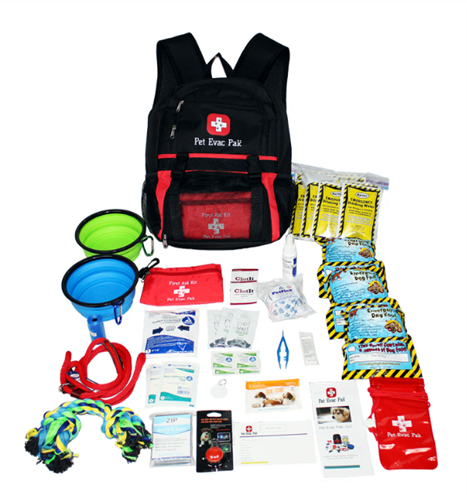
- Sturdy leashes, harnesses and/or carriers to transport pets safely and ensure that they can’t escape.
- Food, drinking water, bowls, litter/pan and a manual can opener if you pet eats canned food.
- Medications and copies of medical records stored in a waterproof container.
- A first aid kit.
- Current photos of you with your pet(s) in case they get lost. Since many pets look alike, this will help to eliminate mistaken identity and confusion.
- Information on feeding schedules, medical conditions, behavior problems, and the name and number of your veterinarian in case you have to foster or board your pets.
- Pet beds and toys, if easily transportable.
Download the CDC’s complete Pet Disaster checklist here.
Many retailers also sell pet emergency kits. For example, The Pet Evac Pak is sold online or in stores across the US.
- Make an Evacuation Plan
-
Keep the following in mind while creating a plan:
- Understand evacuation routes and procedures. During emergencies, your local government may provide information on road closures or evacuation routes. Monitor the news to stay aware.
- For larger animals, have a plan for evacuation. Save contact information for large animal evacuation organizations. If used, be sure to record the location that your animal is being brought to.
- Know which hotels along your evacuation route will accept pets in an emergency. BringFido has secured thousands of hotels and shelters for evacuees around the United States. They will help you find a local pet friendly hotel in your area for free.
- Know which friends, relatives, boarding facilities, animal shelters or veterinarians can care for your pets in an emergency. Prepare a list with phone numbers.
- Make sure that your pet’s vaccinations are up-to-date and that all pets are wearing collars with current info and identification.
- Additional Resources
-
ASPCA: Emergencies come in many forms, and each type of disaster – keep your pets safe.
Bring Fido (US): Stands ready to assist during any emergency evacuation for free.
Ready.Gov:Prepare your Pets!
Equine disaster preparedness: Horses require extra consideration in disaster planning
Livestock disaster preparedness: Be prepared in the event of an emergency
Community cat disaster preparedness: You can help community (feral and stray) cats before and after a hurricane, earthquake, flood or other disasters.